
 Start Free
Protect High-Impact Coding-Agent Actions
Evaluate Documented Shell, File, Network, Secret, Write, And Tool-Action Categories Before Execution Through A Supported Integration Path.

Empower Development And Security Teams With Agentic AI To Find And Fix Risks Across Code, Applications, AndInfrastructure, While Securing AI Systems And Agents From Development To Deployment.
curl -fsSL https://www.agentguard.one/install.sh | bashFor macOS / Linux: installs the OSS CLI and enables local-first runtime protection where the supported connection path exposes it.
AI Agents Do More Than Generate Text. They Call Tools, Access Data, Execute Commands, And Interact With External Services. Each Action Creates A Security Decision That Text-Only Controls May Not Cover.
Commands, File Changes, API Calls And Automated Workflows Can Create Immediate Consequences.
Unreviewed Skills, Plugins And MCP Servers Can Introduce Prompt Injection, Malicious Tools, Credential Leaks Or Backdoors.
Manipulated Instructions Can Change Which Tools An Agent Chooses And How Those Tools Are Used.
Components Can Be Reviewed Before Use, While High-Impact Actions Still Need A Runtime Decision.
AgentGuard Evaluates Documented Shell, File, Tool, Network, Secret, Sensitive-Write, And Webhook-Exfiltration Action Categories Before Execution.
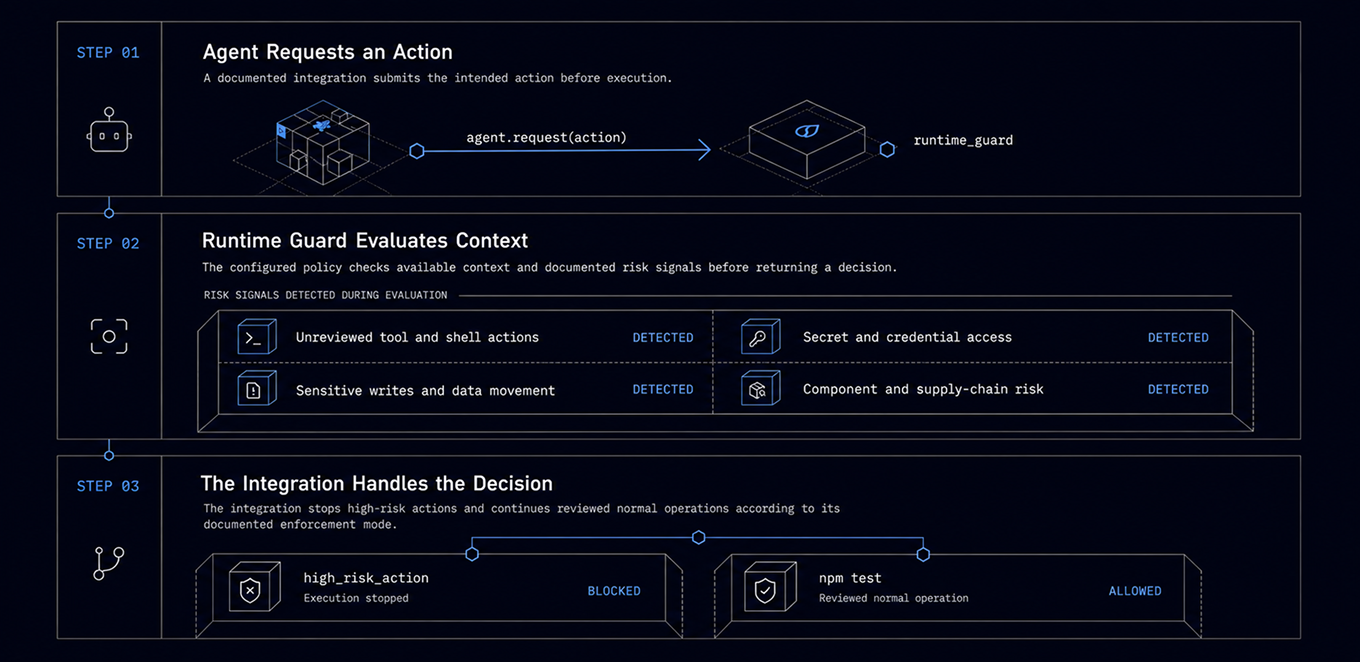
Runtime protection, deep security analysis, and continuous environment monitoring.



Identify Embedded Secrets, Tokens, Private Keys, And Connection Strings.
Review Encoded, Obfuscated, Role-Manipulation, And System-Prompt Extraction Patterns.
Identify Command Patterns Associated With Remote Execution And Unsafe Payload Delivery.
Review Suspicious Access And Transfer Paths That May Expose Sensitive Data.
Compare Declared Tool Needs With Risky Permission Combinations.
Review Suspicious Domains, Phishing Patterns, Shortened Links, And Lookalike URLs.
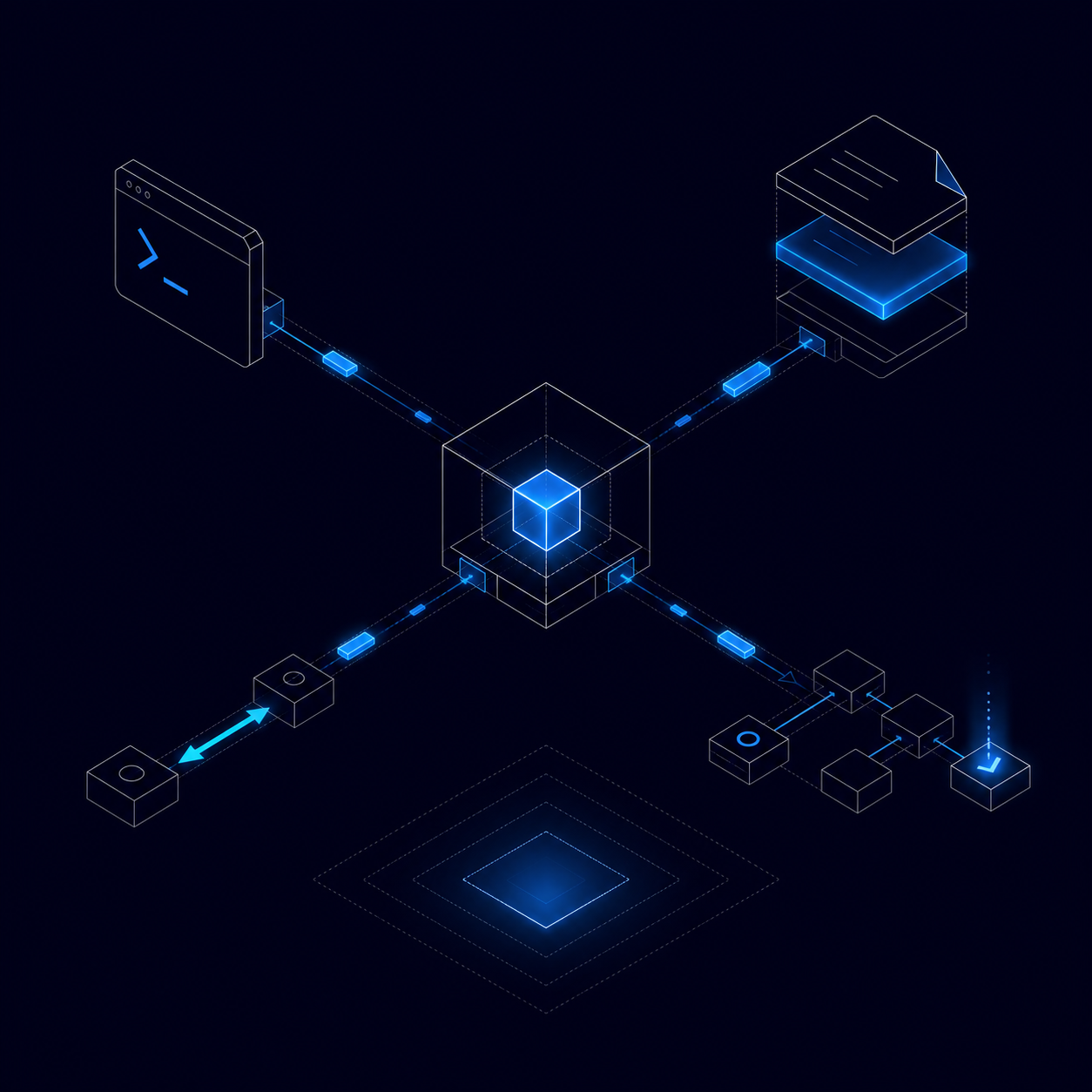
A documented agent workflow requests an action or component scan. Input and integration depth must be verified in the target environment.
Evaluate Documented Shell, File, Network, Secret, Write, And Tool-Action Categories Before Execution Through A Supported Integration Path.
Scan Documented Component Types Before Adding Them To A Trusted Agent Workflow.
Review Documented Findings, Qualified Audit Events, Integration Boundaries, And Public Advisories When Evaluating AI CISO Responsibilities And Wider Deployment. These Evidence Surfaces Do Not Establish AgentGuard As A Complete AI CISO Platform.
 Advisories
 AI Agent Threats
Review Public AgentGuard Advisories Covering Documented Threats Across Agent Components, Software Supply Chains, Phishing URLs, And Prompt-Injection Payloads.
Track the latest industry updates across AI agents, Web3 security, and infrastructure ecosystems.
Start With The Official Quickstart, Or Talk To The AgentGuard Team About Integration Depth, Data Handling, And Deployment Requirements.
Local-first protection for individual agents
Runtime guardrails for personal agent work
Team protection for shared agent workflows
Advanced governance for production agents
Custom controls for regulated agent operations
AgentGuard is a security platform for AI agents. It combines runtime protection and component review to help teams identify risks and evaluate observable high-risk actions through supported selected integration paths.
Prompt filters mainly focus on input or output text. AgentGuard focuses on execution risk: what an agent is about to run, access, or trigger.
AgentGuard provides two layers of security analysis. Runtime Guard focuses on observable high-risk actions during execution. Deep Scan presents 6 featured public categories; implementation may run additional internal detectors for static risk analysis on agent-related code and components.
Daily Patrol monitors documented security-relevant changes inside a supported OpenClaw workspace. Confirm current availability and environment scope before relying on it.
In local mode, AgentGuard does not upload full code, prompts, secrets, or file contents. When cloud services are enabled, AgentGuard may upload sanitized action previews and metadata to support review, approval, and audit workflows.
AgentGuard supports MCP server scanning and MCP-related integrations. However, it should not be described as fully monitoring or blocking all third-party MCP runtime calls today.
AgentGuard supports runtime hooks for Claude Code, OpenClaw, and Hermes. For Codex, Gemini, Cursor, and Copilot, support mainly depends on Skill or command-level integrations and may vary by environment.
Start With The Official Quickstart, Or Talk To The AgentGuard Team About Integration Depth, Data Handling And Deployment Requirements.