
What Is an AI Acceptable Use Policy?
An AI acceptable use policy states which AI uses an organization permits, restricts, or prohibits, and what employees, contractors, and agent owners must do before using an AI system. It is a rule for people and operating teams. It is not, by itself, a technical mechanism that stops an agent or model at runtime.
By Agent Guard Team3 min read
What Is an AI Acceptable Use Policy?
An acceptable use policy (AUP) defines how people may use an organization's technology, systems, and network resources. An AI acceptable use policy applies that general structure to models, AI services, connected tools, data disclosure, generated outputs, and autonomous actions. It states which AI uses are permitted, restricted, or prohibited, but it is not a technical mechanism that stops an agent at runtime.
What a useful policy answers
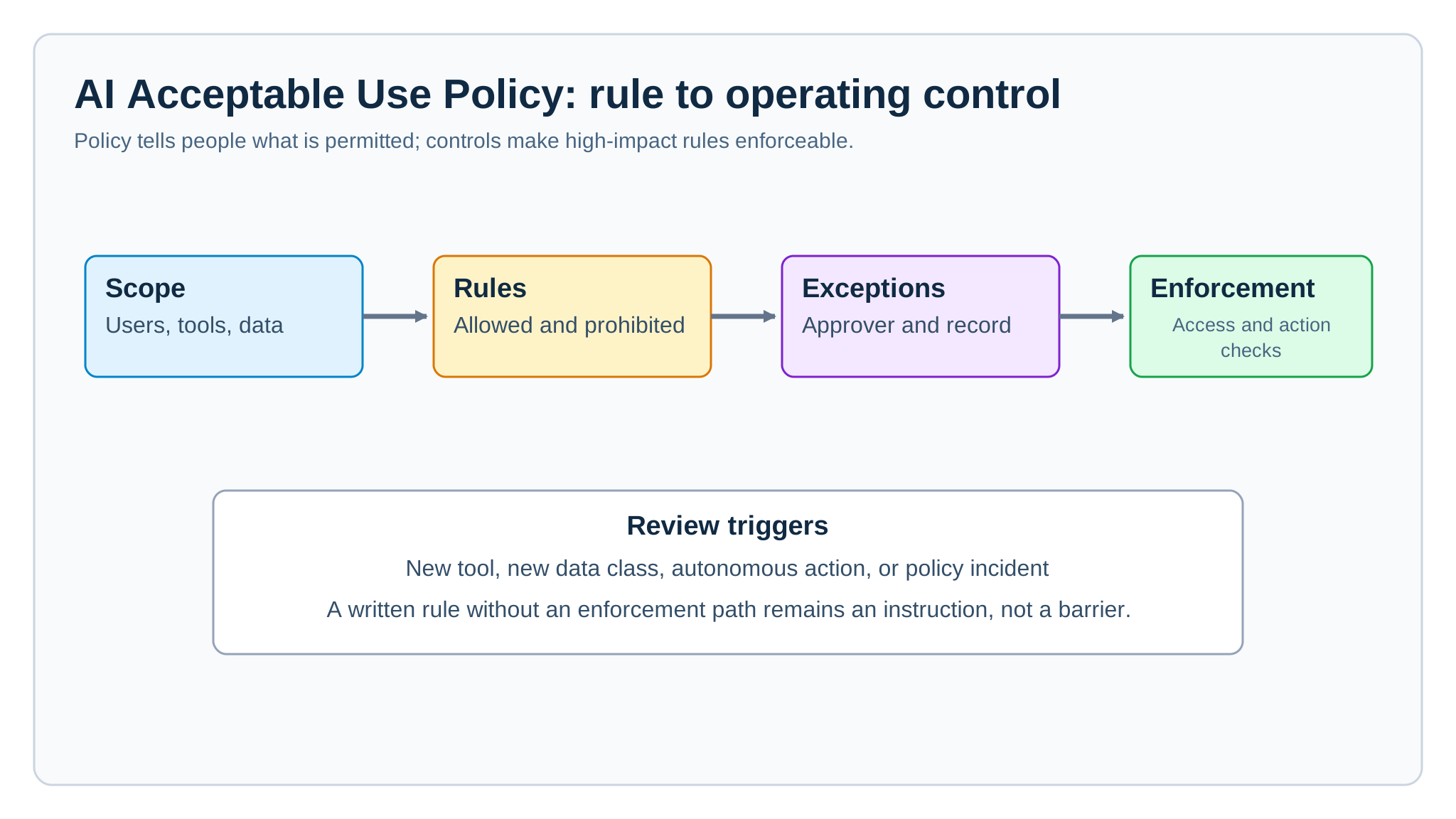
A usable policy identifies the covered users and tools, allowed business purposes, prohibited data and actions, approval and exception paths, recordkeeping expectations, reporting channels, and consequences for noncompliance. It should distinguish common situations rather than use a single warning such as “use AI responsibly.”
For example, it can permit staff to summarize non-sensitive internal documents in an approved service, prohibit sending customer records to unapproved tools, and require approval before an agent can send a binding external communication. Each rule should name the decision a user has to make in normal work.
Why policy language needs technical backing
People cannot reliably follow rules they cannot see at the moment of action. An agent can also act faster than a human policy reader. Pair high-risk rules with access controls, data classification, identity restrictions, domain allowlists, approval steps, or pre-action enforcement. The AI agent security controls guide can help locate those mechanisms.
The division of labor is clear: the policy explains what is allowed and who decides; the control applies that decision in a system. A policy that says “do not export confidential data” does not prove that a browser agent, connector, or service account cannot do so.
Policy, governance policy, and data policy
An AI governance policy establishes broader organizational objectives, ownership, and oversight. A data-handling policy describes classification and permitted treatment. An AI acceptable use policy translates those principles into day-to-day decisions for specific tools and activities. They should be consistent but not interchangeable.
This distinction avoids a common failure: a broad governance statement is published, but employees have no practical answer about whether they may upload a file, connect a new agent, or use a public model for a customer task.
Writing rules that people can follow
Use examples drawn from real workflows, clear tool categories, and plain escalation instructions. Explain what counts as an approved tool, how a user requests an exception, and what happens if an AI service produces suspicious output. Keep the document current as models, integrations, and data classifications change. An AI acceptable use policy extends the general AUP with explicit rules for models, agents, data disclosure, and connected tools; it does not replace the broader technology-use policy.
The NIST AI RMF is useful for framing governance and accountability, but it will not write a company’s permitted-use decisions. Those need input from legal, security, product, and the teams doing the work.
Where agent use needs more detail
An agent can access tools, persistent memory, browser sessions, or external APIs. A policy should therefore say who may authorize such connections, what identities may be used, which data sets are prohibited, and when human approval is required before an external effect. Do not collapse an autonomous workflow into the same category as a chat assistant that only drafts text.
The prompt injection glossary explains why untrusted content can influence an agent's behavior. The policy should not promise that users will spot every malicious instruction; technical design must limit what a misleading instruction can make the agent do.
An approval rule should therefore identify the workflow, the accountable owner, the connected tools, the data involved, and the action that needs a human decision. This gives a reviewer enough context to decide whether a general policy rule applies to a specific agent deployment.
The AI agent threat modeling guide is useful when a policy owner needs to turn a broad rule into an agent-specific approval decision.
When to update it
Review the policy when the organization introduces a new model provider, tool integration, data class, autonomous action, or regulatory obligation. The best indicator of quality is not length. It is whether a person or owner facing a real task can determine the permitted path and whether the organization can enforce the high-impact rules it wrote.
Frequently Asked Questions
How is an AI acceptable use policy different from a general AUP?
A general AUP governs permitted use of organizational technology and network resources. An AI-specific AUP applies that structure to models, AI services, agent tools, data disclosure, generated outputs, autonomous actions, and approval requirements.
What should an AI acceptable use policy prohibit?
The answer depends on the organization, but common rules address unapproved AI services, restricted data, impersonation, unreviewed external communications, unsafe autonomous actions, and connections that use unmanaged identities or excessive permissions.
Can an AI acceptable use policy stop an agent action?
No. A policy states what is permitted and who decides. Technical controls must apply high-impact rules through identity, data, destination, approval, and pre-action checks at the relevant system boundary.
Check whether your highest-risk AI rules are backed by controls that can stop an action.
Check controls