
What Is an AI Agent Harness?
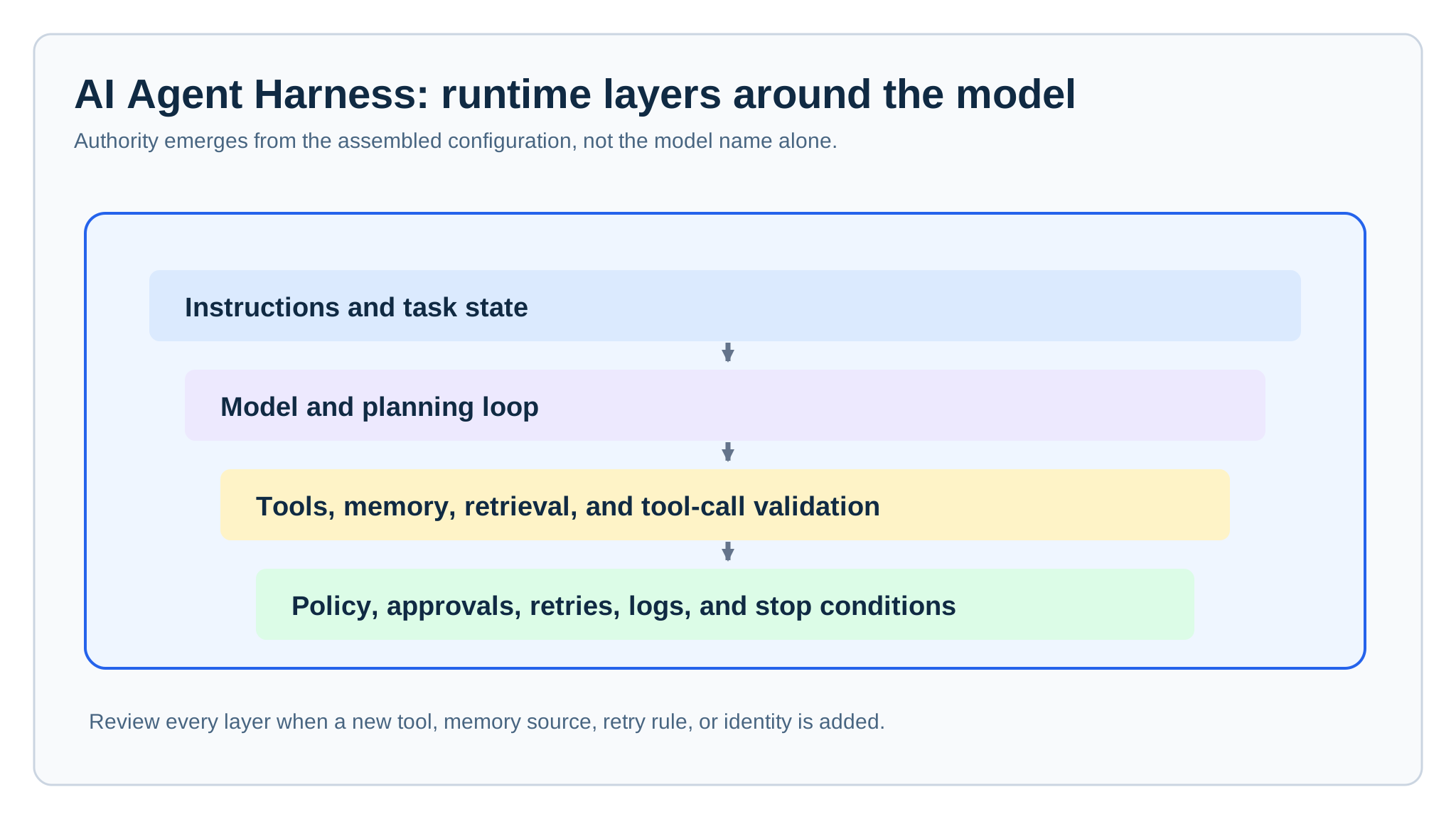
An AI agent harness is the software layer that turns a model into an operating agent. It assembles instructions, context, tools, memory, execution rules, evaluation hooks, and approvals, then decides how a model response becomes the next step in a workflow.
By Agent Guard Team3 min read
What Is an AI Agent Harness?
An AI agent harness is the software layer that turns a model into an operating agent. It assembles instructions, context, tools, memory, execution rules, evaluation hooks, and approvals, then decides how a model response becomes the next step in a workflow. The Databricks AI agent harness explainer provides a direct component-oriented definition.
Why the harness matters more than the model name
Two agents can use the same model and have very different authority. One may answer questions from a fixed document set. Another may read a repository, call tools, retry failures, write files, and open a pull request. The model name does not explain that difference; the harness configuration does.
Reviewing only prompts misses the code that determines tool availability, retry behavior, context persistence, and stopping conditions. For an agent that changes external state, those decisions are part of the security boundary.
What a harness usually controls
A harness commonly chooses the system instructions, model parameters, memory or retrieval sources, tool schemas, tool-call validation, loop limit, error handling, approval steps, and logging. It may also route between models or agents. Each setting can change outcomes. A longer loop can create repeated tool attempts; a new memory source can expose sensitive context; a permissive tool schema can widen the action surface.
The AI agent security controls guide provides a useful control map for reviewing that surface. The harness is where those controls must be wired into the actual run rather than left as standalone policy documents.
A code-agent example
A coding agent harness may read source files, search documentation, create a patch, run tests, and ask for confirmation before opening a pull request. The critical boundary is not the agent’s ability to suggest code. It is the configuration that permits a write, selects a repository identity, and determines whether failed tests or untrusted repository content can alter the next tool call.
If a team adds an MCP server to this harness, the server becomes a new input and capability source. The MCP security tools review covers the sort of component questions to ask before enabling it: provenance, permissions, tool behavior, and monitoring. It does not establish that the harness will enforce a safe approval path.
Harness versus orchestration library
An orchestration library supplies reusable primitives for prompts, tools, and model calls. A harness is the assembled runtime behavior for a particular agent. An evaluation harness is different again: it runs controlled cases and records results but may not invoke production targets. The words are often used loosely, so state which role is meant before comparing products or responsibilities.
What to test after a harness change
Test a specific change against a harmless target. If a new tool is added, verify its identity, allowed arguments, approval path, and failure behavior. If memory changes, verify which content is retained and who can retrieve it. If retries are introduced, check whether the agent can repeat an unsafe request after denial.
Untrusted content needs its own fixtures. The prompt injection glossary describes why instructions arriving through files, webpages, or tools should not be treated as trusted system policy. A harness should preserve that boundary while keeping an audit trail of the action it proposed.
Operating guidance
Version the harness with its tool definitions and policy configuration. Tie each production deployment to its model settings, context sources, active tools, and approval rules. That gives engineering and security a concrete object to review when an agent gains a new capability, rather than a vague assurance that the model was tested.
For broader agent-risk context, use the OWASP Agentic AI Top 10.
Frequently Asked Questions
What does an AI agent harness control?
A harness assembles instructions, context, memory, tools, model settings, loop and retry behavior, validation, approvals, and logs. Those choices determine how a model response becomes the next action in a specific workflow.
How is an agent harness different from an orchestration library?
An orchestration library provides reusable primitives for prompts, model calls, and tools. A harness is the assembled runtime configuration for one agent, including its authority, stopping conditions, approvals, and production behavior.
What should be retested after a harness change?
Retest the changed capability and its boundaries: tool identity and arguments, memory access, approval paths, retry behavior, failure handling, untrusted inputs, logging, and the effect at a harmless target.
Review the code and policies that turn one model response into an external action.
Review runtime