
What Is ISO/IEC 42001?
ISO/IEC 42001 is an international standard for establishing, implementing, maintaining, and continually improving an artificial intelligence management system (AIMS). It sets management-system requirements for organizations that develop, provide, or use AI. It does not prescribe a particular model architecture or guarantee that an AI system is secure.
By Agent Guard Team3 min read
What Is ISO/IEC 42001?
ISO/IEC 42001 is an international standard for establishing, implementing, maintaining, and continually improving an artificial intelligence management system (AIMS). It sets management-system requirements for organizations that develop, provide, or use AI. It does not prescribe a particular model architecture or guarantee that an AI system is secure.
What an AIMS governs
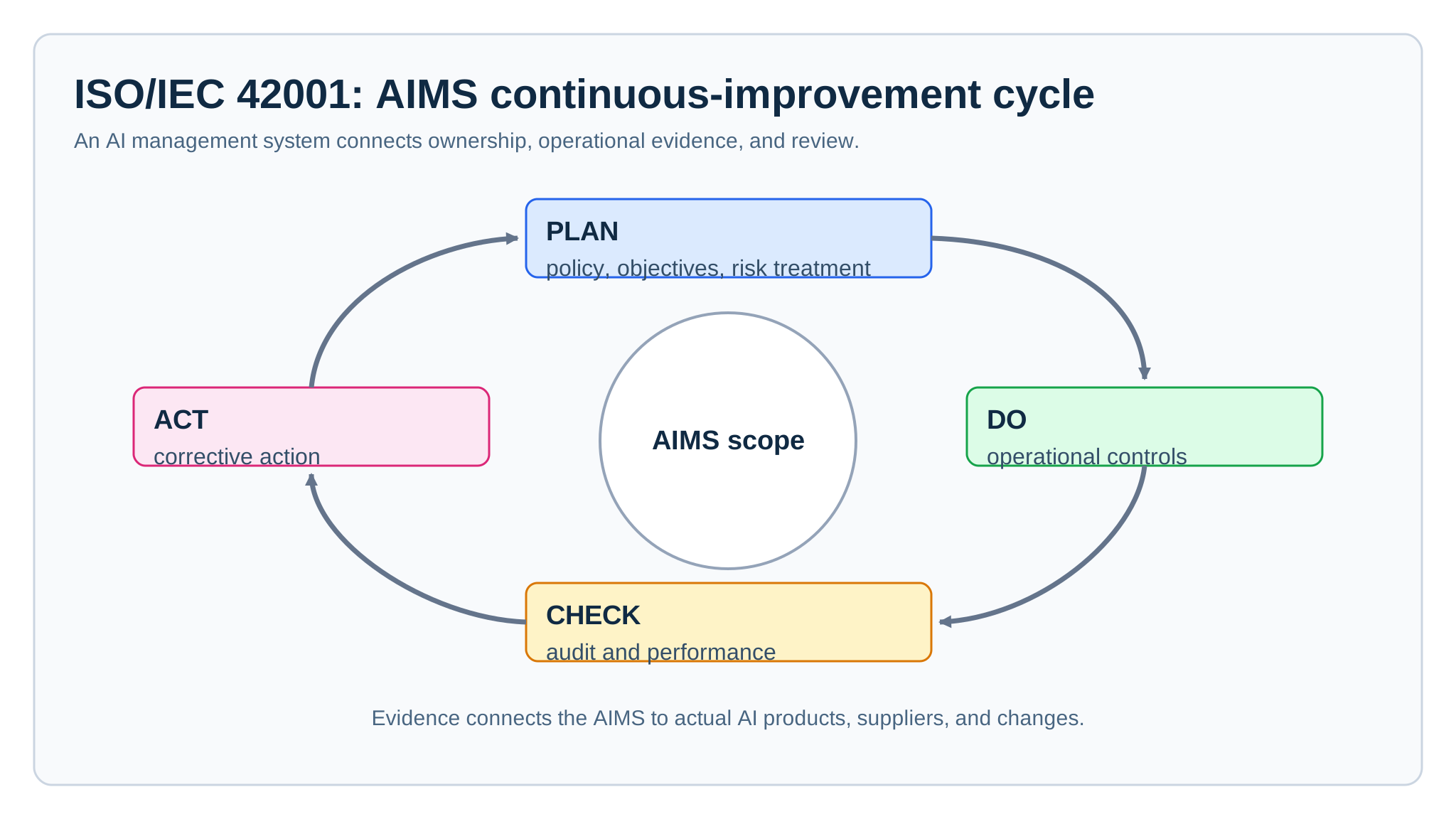
An AIMS gives an organization a repeatable way to set policy, define roles, assess AI-related risks, establish operating controls, evaluate performance, correct problems, and conduct management review. The scope should state which AI activities, business units, and systems are included. That boundary is important: a certificate or program claim is meaningful only for the scope it covers.
The ISO/IEC 42001 overview describes the standard and its management-system purpose. Use the published standard and accredited assessment guidance for formal conformity questions rather than relying on vendor summaries.
How it changes day-to-day AI operations
For a product team running agents, an AIMS can require clear approval for intended use, supplier review for model and tool providers, documented changes to prompts and connections, incident handling, and periodic performance evaluation. The mechanism is organizational: it ensures these activities have owners, records, and follow-up instead of being handled differently by each team.
That does not replace technical implementation. If an agent has access to a customer system, the organization still needs controls around identity, data, and action execution. The AI agent security controls guide addresses those technical boundaries.
ISO/IEC 42001, ISO/IEC 27001, and AI RMF
ISO/IEC 27001 is an information security management-system standard. ISO/IEC 42001 focuses on AI management. Organizations can integrate the systems because they share management disciplines such as scope, leadership, risk treatment, internal audit, and improvement, but the AI-specific objectives and evidence remain distinct.
NIST AI RMF is voluntary risk-management guidance rather than a requirements standard. It can support an ISO/IEC 42001 program by helping teams articulate context, measure risk, and choose treatments. Neither framework eliminates the need to test a particular agent workflow.
Evidence an auditor or reviewer will need
Expect to show the AIMS scope, policy, assigned responsibilities, AI risk assessments, operational procedures, supplier and change records, monitoring evidence, internal-audit results, corrective actions, and management-review outputs. The exact evidence depends on the organization and certification scope, but the system must demonstrate that it is maintained over time.
An AI agent threat model can be one input to risk assessment for an agentic system. It should identify the model, tools, data, identities, and targets rather than merely stating that the product uses AI.
Common misunderstanding
ISO/IEC 42001 is not a badge that transfers automatically to every vendor integration or newly deployed agent. A management system can be well designed while a new connector is introduced without correct technical controls. Conversely, a strong individual control will not establish an AIMS without policy, ownership, review, and corrective action.
For connected components, use a component-specific review. The MCP security tools review is relevant to assessing an MCP server before it enters an agent workflow; it is not evidence of ISO conformity.
When to adopt it
ISO/IEC 42001 is appropriate when an organization needs a consistent governance system across multiple AI products, suppliers, and teams, or when customers and regulators expect management-system evidence. Begin by defining scope and accountable leadership, then connect each requirement to the work already performed by product, security, and operations teams.
The ISO/IEC 42001 publication record is the second official reference for the standard's scope and edition.
Frequently Asked Questions
What is an artificial intelligence management system under ISO/IEC 42001?
An AIMS is the organization's system for setting AI policy, assigning roles, assessing risk, operating controls, evaluating performance, correcting problems, and conducting management review within a defined scope.
How is ISO/IEC 42001 different from ISO/IEC 27001?
ISO/IEC 42001 focuses on AI management, while ISO/IEC 27001 focuses on information security management. Their management disciplines can be integrated, but AI-specific objectives, risks, impacts, and evidence remain distinct.
Does ISO/IEC 42001 certification prove every AI system is secure?
No. Any certification applies to a defined management-system scope. It does not automatically validate every model, supplier, connector, or newly deployed agent; those components still require technical review and evidence.
Connect management-system controls to evidence from the agent actions they govern.
See controls