
ChatGPT Team Is Now Business: A Security Review
A team rollout needs workspace controls and operating evidence, not just a plan comparison.
By Agent Guard Team4 min read

ChatGPT Team Is Now Business: A Security Review
People still search for ChatGPT Team, but OpenAI's current workplace offering is presented as ChatGPT Business. The security question is not the name. It is whether the workspace gives administrators enough control over identities, data, sharing, apps, and evidence for the intended use.
A paid workspace can improve organizational control. It does not stop a member from pasting restricted data or authorizing an unnecessary connector.
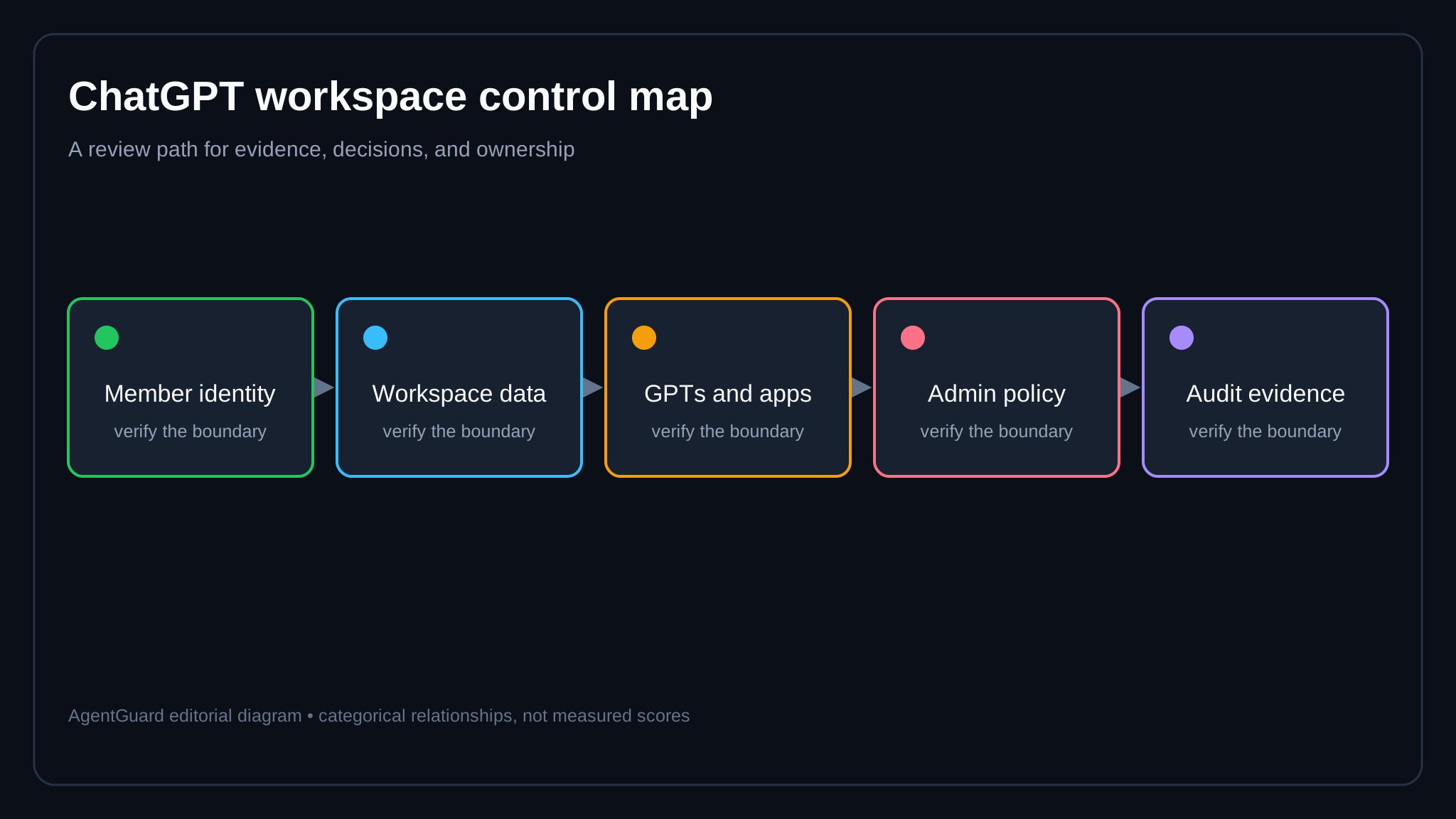
*Review identity, data, extensions, policy, and evidence as one workspace boundary.*
Quick verdict
ChatGPT Business is a reasonable candidate for teams that want a managed workspace rather than individual consumer accounts. Approval should depend on the current contract and a tenant-level test of SSO or account lifecycle, data settings, sharing, GPTs or apps, connectors, retention, and administrator visibility.
Use OpenAI's current ChatGPT Business page for plan claims and its enterprise privacy information for stated business-data handling. Do not rely on third-party plan summaries when a control decision depends on current terms.
Workspace identity and lifecycle
Confirm how members join, which domains are allowed, whether SSO and automated provisioning are available for the purchased plan, and how access is removed. Test an actual joiner, role change, and leaver.
Separate administrators from ordinary members. Decide who can change workspace settings, add apps, publish GPTs, or invite external users. A shared workspace is not a substitute for a controlled identity lifecycle.
The AI acceptable use policy should identify approved use cases and prohibited data before rollout.

Prompts, files, and retention
Classify prompts, uploads, generated files, and conversation exports. Verify the plan's current model-training terms, retention behavior, deletion path, and administrator controls in writing.
Test with synthetic sensitive data. Observe where it appears in history, search, exports, shared links, and connected applications. Check whether deleting a conversation addresses every copy required by policy.
Use AI DLP controls at the point where data leaves managed systems. User training alone is not a reliable boundary.
GPTs, apps, and connectors
Custom GPTs, apps, and connectors can change the data path. Inventory which extensions are permitted, what scopes they request, who owns them, where their privacy terms live, and how updates are reviewed.
Disable unreviewed integrations by default where the plan permits. Test revocation and confirm that a removed connector cannot continue using an old credential.
If a GPT or app can take actions, treat each action as an authorization decision. The model's intent is not sufficient evidence that the user approved the target and payload.
Sharing and collaboration
Test conversation sharing, GPT publication, file links, and external invitations. Confirm whether a member can move content outside the workspace with a public link or copy it to a personal account.
Define ownership for shared artifacts. A useful team workflow can become an orphan when its creator leaves unless another owner can review and maintain it.
Administration and evidence
List the events security and compliance teams need: membership changes, role changes, connector grants, GPT publication, data exports, policy changes, and high-impact actions. Confirm which events the purchased plan actually exposes and how long they remain available.
Run a tabletop exercise for a leaked conversation link, compromised member, and unapproved connector. Practice revocation, evidence collection, user notification, and policy review.
These operating controls matter as much as the vendor's platform features. A broader comparison of AI agent governance platforms can help when ChatGPT is only one of several agent environments.
Where AgentGuard fits
AgentGuard's documented strengths sit near supported agent components and runtime actions. It is not a replacement for ChatGPT Business workspace administration and should not be presented as a native control over every ChatGPT conversation.
It may contribute when a workflow leaves ChatGPT and reaches a supported tool, command, file, or network boundary. Validate that integration directly.
Review one workspace with synthetic data and real administrative policies before broad rollout.
Frequently Asked Questions
Is ChatGPT Team still available?
OpenAI's current business offering and naming should be verified on its official plan pages. Existing searches may still use the former ChatGPT Team name.
Is ChatGPT Business safe for confidential data?
Review the current contract, data controls, retention, workspace settings, connectors, and user practices for the applicable plan before approving confidential data.
What should administrators test before rollout?
Test provisioning and removal, sharing boundaries, custom GPT and app controls, sensitive-data handling, admin visibility, retention, and incident response.
Test one ChatGPT Business workspace with real policies and synthetic sensitive data.
Review Workspace