
Claude Enterprise and the API: A Security Review for Buyers
Claude Enterprise and the Anthropic API solve different control problems and need a joined but separate security review.
By Agent Guard Team4 min read

Claude Enterprise and the API: A Security Review for Buyers
Claude Enterprise and the Anthropic API are related products with different control boundaries. Enterprise governs people using a managed workspace. The API lets a customer application send requests and, potentially, connect model output to data and tools.
Buying Enterprise should not be treated as automatic approval for an API workload. Review identity, data, administration, and evidence on both sides.
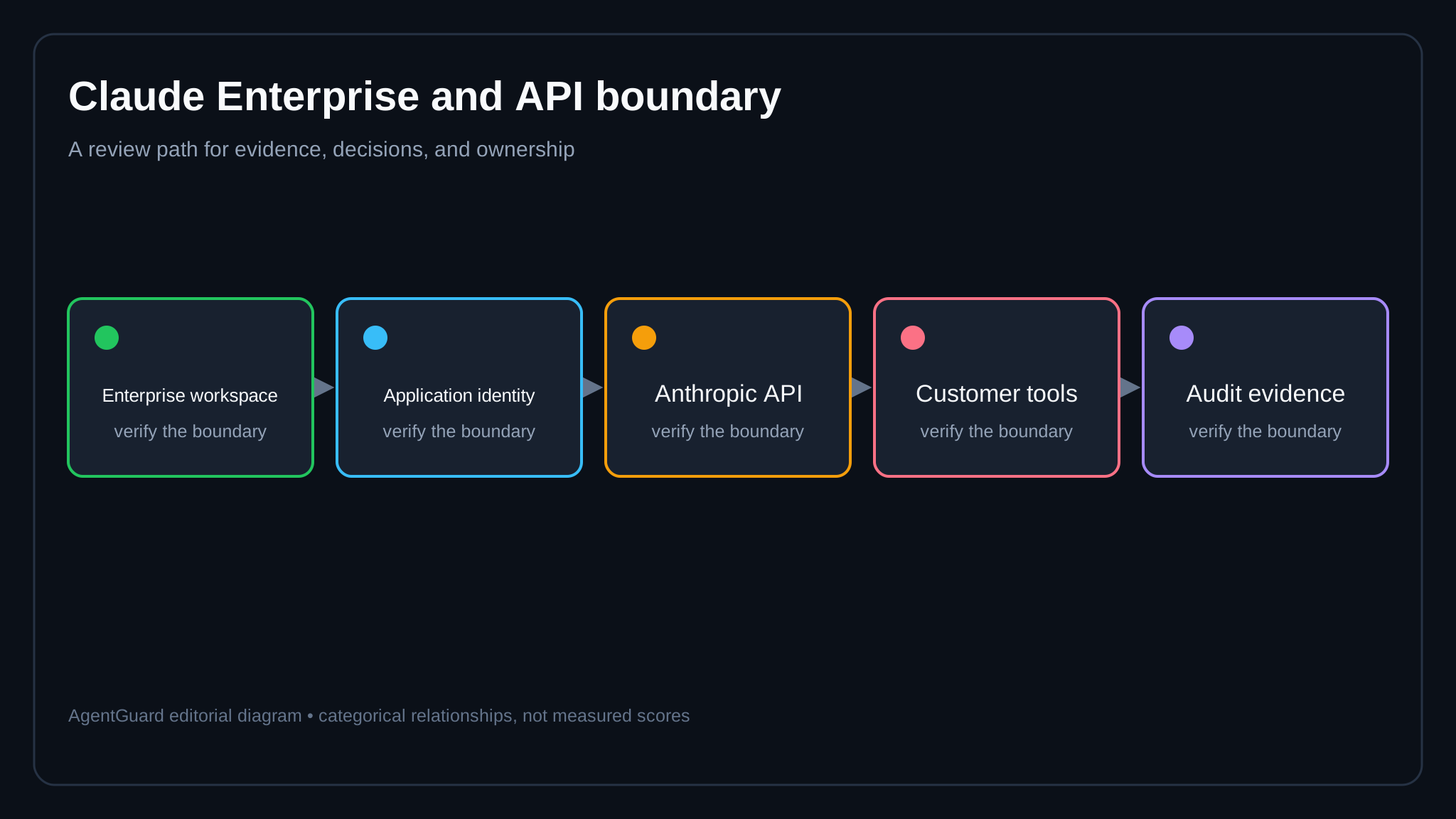
*Join the workspace and API reviews at governance, but keep their identities, data paths, and operating controls separate.*
Start with the commercial boundary
Anthropic's current Enterprise plan article describes the workspace offering. The Claude API documentation covers developer integration. Confirm entitlements, billing, support, regions, and contractual data terms with Anthropic; do not infer them from a shared brand name.
Document which legal entity and organization owns each account. Record whether the workload uses a user workspace, API organization, cloud marketplace, or another deployment path.
Enterprise workspace controls
Test SSO, provisioning, role separation, member removal, sharing, connectors, retention, and administrator visibility for the purchased plan. Use a dedicated test group and synthetic data.
Decide which content is permitted in chats and files. AI DLP controls should cover the path into the workspace as well as exports and connected applications.
Workspace administration governs users. It may not govern a separately built API application unless the commercial and technical setup explicitly connects them.
API identity and key management
Give each application or environment a distinct identity and credential. Store keys in a managed secret system, rotate them, and prevent them from appearing in source, prompts, logs, or client-side code.
Separate development, staging, and production. Apply spend and rate controls where available, then alert on unusual use. A budget limit reduces financial exposure; it does not authorize the data or action behind the call.
Test revocation. A removed key should stop working quickly, and the team should be able to identify where it was used.

Application data path
Map user input, system instructions, retrieval sources, prompt assembly, API request, response, cache, logs, analytics, support tooling, and backups. Classify data at each step.
Minimize what the application sends. Redact secrets before logging and define separate retention for operational metadata and content. Confirm how deletion requests propagate through customer-owned stores as well as vendor systems.
When several agent systems share data and tools, an evaluation of AI agent governance platforms can help assign ownership. It does not replace implementation controls.
Tools and side effects
The API returns model output; the customer application decides what to do with it. If the response can select a tool, write a file, query a database, send a message, or change a cloud resource, put an authorization decision before that side effect.
Validate tool schemas and arguments. Restrict destinations and data classes. Use approvals for legitimate high-impact actions and keep irreversible operations out of unattended flows.
This is the practical meaning of policy enforcement: rules need an execution point that can allow, warn, require approval, or block.
Admin API and analytics
Administrative and analytics APIs can improve visibility, but they also carry privileged credentials and sensitive organization data. Scope their keys, isolate the collector, and log administrative access. Verify pagination, rate limiting, error handling, and retention in the actual integration.
Do not claim an audit trail until security can reconstruct a test request from application identity through model call to downstream action.
Where AgentGuard fits
AgentGuard's public material describes runtime analysis endpoints, component scans, and action decisions in supported agent environments. It can be evaluated near a custom application's tool or runtime boundary where the integration is real.
It does not administer Claude Enterprise, store Anthropic API keys for you, or replace customer IAM and application authorization. Its value is narrow and testable: does it add a useful decision or evidence point on the path you operate?
Review the workspace and API architecture before connecting Claude to production data or tools.
Frequently Asked Questions
Does Claude Enterprise include the Anthropic API?
Do not assume the workspace plan and API are one entitlement. Verify current commercial terms, billing, organization setup, and documentation with Anthropic.
What is the main security difference between Claude Enterprise and the API?
Enterprise governs a user workspace; API security also depends on customer-built applications, service identities, keys, logs, retrieval, tools, and downstream authorization.
What should an API security pilot test?
Test key scope and rotation, tenant separation, data handling, rate and spend limits, prompt and response logging, tool authorization, failure modes, and incident evidence.
Map workspace and API responsibilities before connecting Claude to production systems.
Review Architecture