
ChatGPT Business vs Enterprise: The Security Questions That Decide the Upgrade
ChatGPT Team is now ChatGPT Business. The upgrade decision depends on required controls and contract terms, not a larger model menu.
By Agent Guard Team4 min read

ChatGPT Business vs Enterprise: The Security Questions That Decide the Upgrade
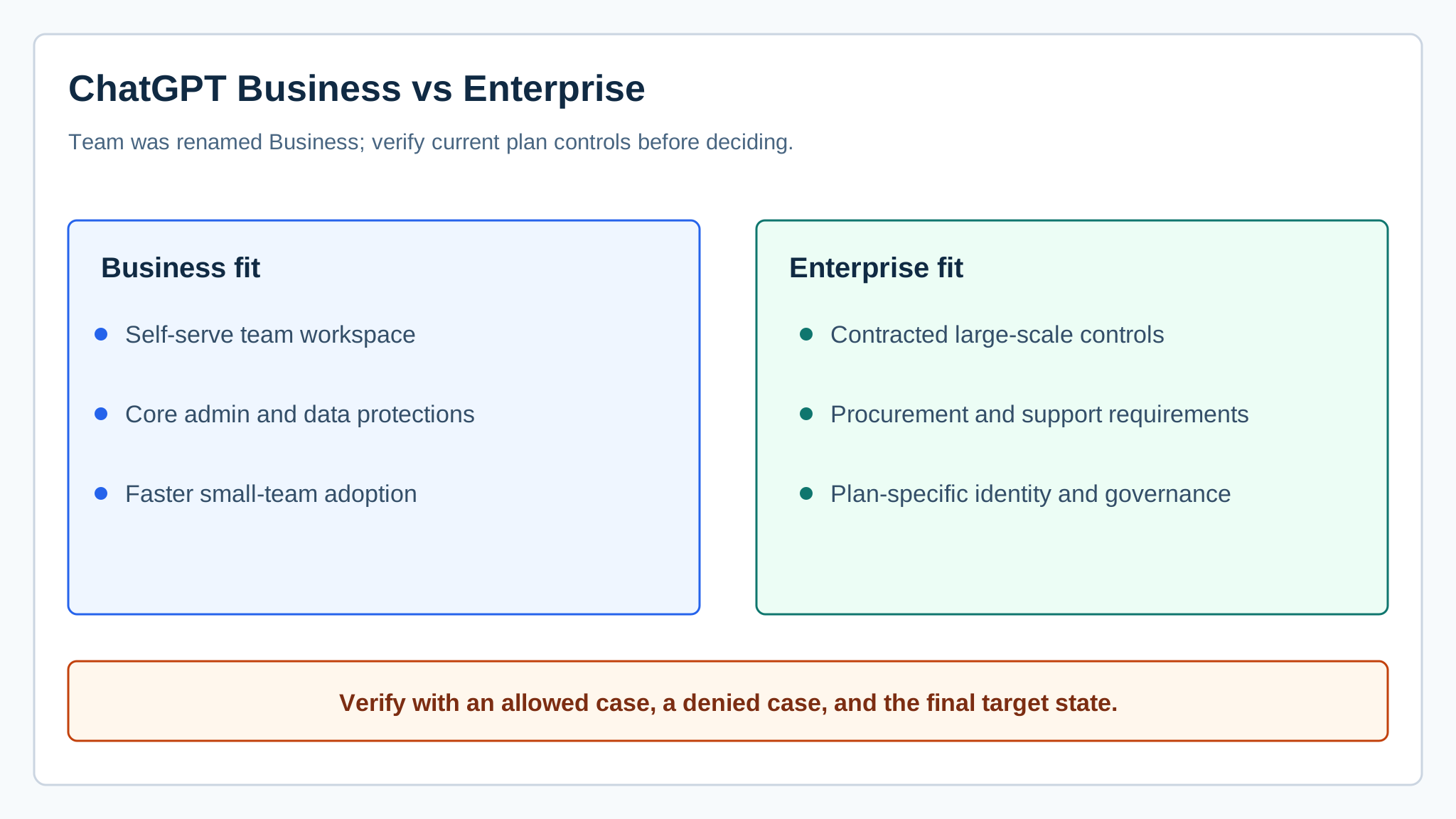
ChatGPT Team was renamed ChatGPT Business. Searches for “ChatGPT Enterprise vs ChatGPT Teams” therefore mix an old plan name with current purchasing questions. The useful comparison is Business versus Enterprise under today's contract and tenant settings.
Do not assume Enterprise is automatically safer or that Business is sufficient because both protect business data. The decision depends on required identity, administration, audit, support, legal terms, scale, and feature controls.
Confirm the current plan names and terms
OpenAI's help center explains ChatGPT Business and preserves the old Team URL for continuity. Start there, then request the current Enterprise materials and contract language. Search snippets and older comparison posts may describe retired names or features.
Build a dated matrix with only verified requirements. Mark values unknown when the public page or vendor response does not establish them. Pricing, support, retention, regional options, and security controls may depend on contract and should not be guessed.
Compare identity lifecycle
Test how each candidate plan handles SSO, provisioning, groups, administrators, guests, deprovisioning, account recovery, and ownership of shared work. The relevant question is not whether a feature appears in a table. It is whether the required identity control exists in the purchased plan and works in the tenant.
The AI agent threat modeling process can help track data and action paths across users, connectors, and custom tools. Record which identities can enable a connector or share a workspace artifact beyond its original group.

Compare data boundaries and evidence
Use representative data classes and verify upload, retrieval, sharing, export, deletion, retention, and administrator visibility. Confirm the vendor's business data commitments on the Enterprise privacy page, then map them to internal policy and the contracted plan.
Test one incident question: can an administrator determine which user, workspace, connector, or custom agent handled the affected data, and can access be revoked without destroying needed evidence? If the answer requires a vendor request, record the expected response path and service level.
Connectors and agents change the plan decision
A small team using chat and document analysis has different needs from an organization connecting repositories, drives, and business systems. Inventory each connector's identity, data scope, write capability, consent, and revocation. Treat custom agents and coding workflows as separate execution surfaces.
The AI agent harness is useful when a plan supports actions beyond chat. Run one allowed and one prohibited task against a reversible target. Confirm permissions, approval, logs, and the final target state.
Decide from requirements, not headcount alone
Enterprise often enters the conversation as an organization grows, but seat count is not the only trigger. A smaller regulated team may need contract, support, or control requirements that drive an Enterprise discussion. A larger low-risk group may still begin with a bounded Business deployment if its requirements are met.
Compare AI agent governance platforms only after defining which hosted features a third-party layer can actually observe or control. A product may govern local components while having no access to a first-party hosted action.
Where AgentGuard fits
AgentGuard can review components and selected agent actions on supported paths. It does not choose the OpenAI plan, replace workspace controls, or provide universal visibility into hosted ChatGPT features. Use it where the deployment exposes a supported component or action boundary that needs separate policy evidence.
Decision guide
Stay with Business when the current plan demonstrably meets identity, data, administration, support, and procurement requirements. Evaluate Enterprise when a required control or contractual term is missing, when scale changes ownership, or when incident and support obligations exceed the self-serve model.
Book a control requirements review for an agentic workflow that extends beyond the ChatGPT workspace.
Frequently Asked Questions
Is ChatGPT Team still available?
OpenAI renamed ChatGPT Team to ChatGPT Business. Older searches and documentation may still use the Team name, so buyers should verify current plan names and features.
When should a company consider ChatGPT Enterprise?
Consider Enterprise when required identity, administration, support, contract, security review, scale, or procurement needs are not met by the current Business plan.
Is Enterprise automatically safer than Business?
A plan can expose stronger or broader controls, but safety still depends on configuration, user behavior, connectors, data policy, monitoring, and response.
How should teams compare the plans?
Create a requirements matrix from current vendor documentation and contract terms, then test provisioning, deprovisioning, data handling, connectors, audit evidence, and recovery in the actual workspace.
Map your required identity, data, audit, and support controls before changing ChatGPT plans.
Map requirements