
ChatGPT Enterprise vs Claude Enterprise: Compare the Work Boundary, Not the Demo
Both products offer enterprise controls. The deciding evidence comes from the exact workspace, connectors, data paths, and agentic workflows your team enables.
By Agent Guard Team4 min read

ChatGPT Enterprise vs Claude Enterprise: Compare the Work Boundary, Not the Demo
ChatGPT Enterprise and Claude Enterprise both package frontier models with workspace administration, identity, data controls, collaboration, and business support. A generic feature table misses the real decision. Security and operational fit depend on the plan in your contract, the workspace configuration, the connectors enabled, and the work employees are allowed to perform.
There is no evidence-based universal winner. Run a matched pilot and keep unsupported pricing, latency, and efficacy claims out of the decision until vendors provide comparable terms or your team measures them.
Start with the contracted workspace
Ask each vendor for the current enterprise architecture, data-use terms, retention options, regional availability, identity support, admin roles, audit exports, incident process, and feature controls that apply to your contract. Public pages change and may describe features that are not enabled in every tenant.
OpenAI's Enterprise privacy page documents its business data commitments and security posture. Anthropic's Claude for Enterprise page describes its enterprise offering and controls. Treat both as first-party scope evidence, then verify the details in procurement and the tenant.
Compare identity and data handling
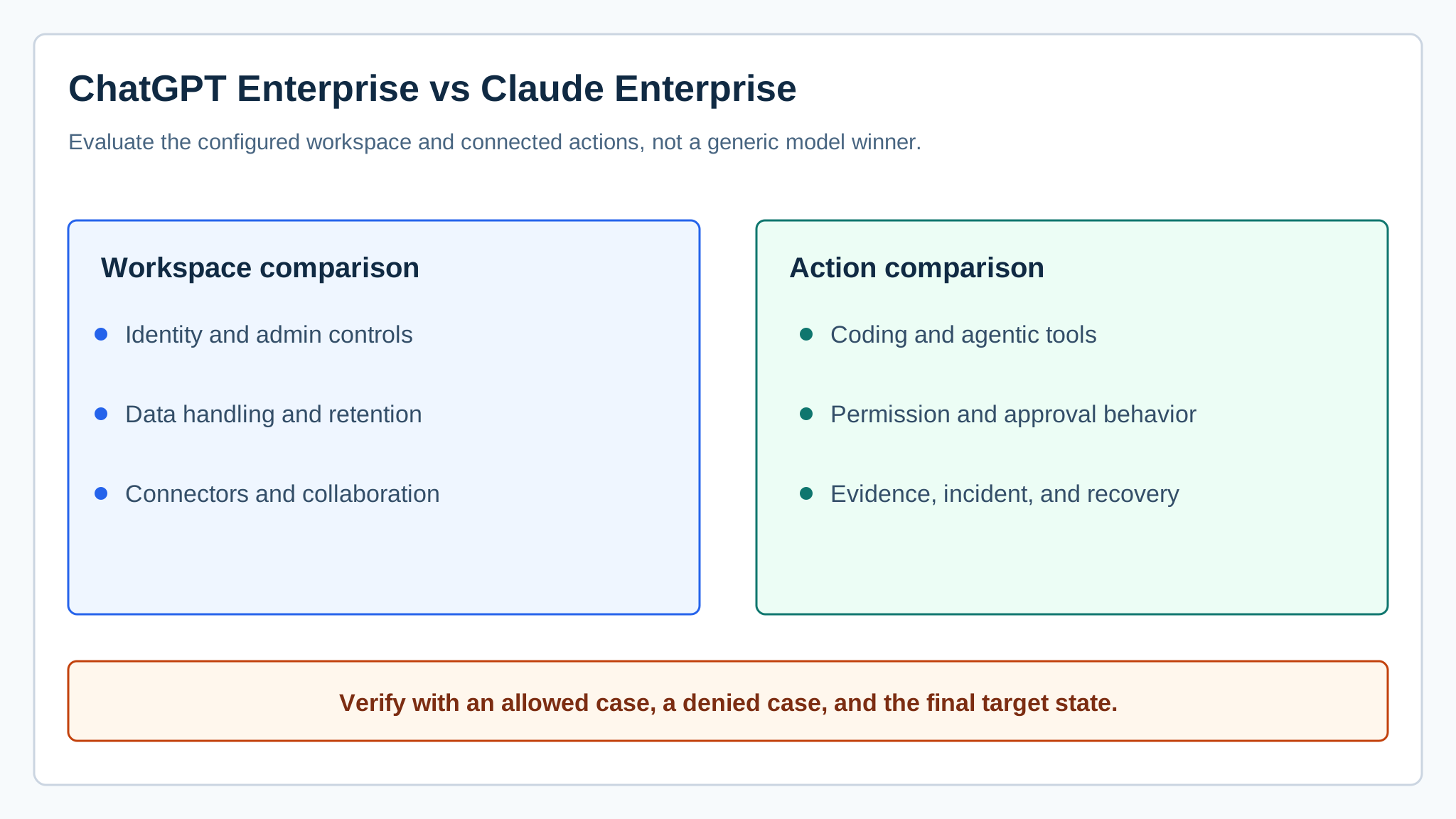
Configure the same identity lifecycle: SSO, group mapping, administrator roles, deprovisioning, guest access, and account recovery. Test a role change and a terminated user. Confirm what remains in shared projects, chat history, files, connectors, and audit records.
Use the same data classes in both pilots: public, internal, confidential, regulated, and prohibited. Verify upload, retrieval, export, deletion, retention, and admin visibility. A policy statement is not enough when workspace settings or a connector can change the path.

Connectors determine the practical trust boundary
A workspace with no connectors has a different risk profile from one that can search drives, repositories, messaging systems, or business applications. Inventory every connector, OAuth grant, accessible tenant, index, and write capability. Test cross-group isolation and stale permissions.
The AI agent threat modeling approach keeps the comparison grounded in assets and effects. Follow one document from source permission through retrieval and output. Then follow one action from user request to final target.
Evaluate coding and agentic workflows separately
Enterprise chat controls do not automatically prove the safety of a coding tool, computer-use feature, connector action, or custom agent. Each surface may use different permissions and execution paths. Record which host runs the action, what credentials it sees, what approval appears, and whether a denial leaves evidence.
An AI agent harness gives both products the same restricted test: synthetic secret, read-only directory, unauthorized destination, reversible write, and expected denial. Compare target state and traces, not the wording of refusals.
Score administration and recovery
A useful pilot measures provisioning time, policy coverage, connector setup, approval friction, audit completeness, export quality, incident investigation, and recovery. Include ordinary user tasks so security controls are not evaluated in isolation from adoption.
Assign the same reviewers to both pilots and define pass, fail, and unknown before testing. Keep vendor-assisted configuration changes in the record. Otherwise one product may benefit from a tuned tenant while the other is judged from default settings.
Teams reviewing AI agent governance platforms should ask whether a third-party control layer can see the relevant ChatGPT or Claude action path. Do not assume integration coverage from a logo; test the exact feature and tenant.
Where AgentGuard fits
AgentGuard can add component scanning and selected action checks where a supported local or integrated path exists. It does not replace either vendor's identity, retention, encryption, audit, connector, or incident controls, and it cannot claim universal interception of first-party hosted features.
Decision guide
Choose the product whose contracted workspace, model behavior, connectors, administration, evidence, and support best fit the work you will authorize. Keep both pilots identical enough to explain the decision and narrow enough to finish.
Book a matched enterprise workflow review if one of the pilots includes a supported agent action boundary.
Frequently Asked Questions
Which is more secure, ChatGPT Enterprise or Claude Enterprise?
Public documentation alone does not establish a universal winner. Security depends on the contracted plan, workspace configuration, identity, retention, connectors, enabled tools, and the workflows a team permits.
What should an enterprise pilot compare?
Use the same user groups, data classes, representative tasks, connectors, prohibited actions, and review criteria. Record both useful outcomes and control failures.
Should model quality decide the purchase?
Model quality matters, but enterprise selection should also cover administration, data handling, integration, evidence, support, cost, and how well the product fits governed work.
Can AgentGuard secure both products?
AgentGuard can add component or selected action controls where an integration path is supported. It cannot guarantee coverage of every first-party feature or replace each vendor's enterprise controls.
Pilot both products with the same users, data classes, connectors, and prohibited actions.
Compare the boundary