
Local vs Remote MCP Server
A decision guide for local versus remote MCP deployment, focused on resource access, service identity, ownership, failure modes, and proof tests.
By Agent Guard Team4 min read
Local vs Remote MCP Server
The protocol does not decide the deployment model. A local server can be the right choice for a narrowly scoped workstation resource; a remote server can suit a shared service. The security work changes because execution, secret storage, and operations ownership change.
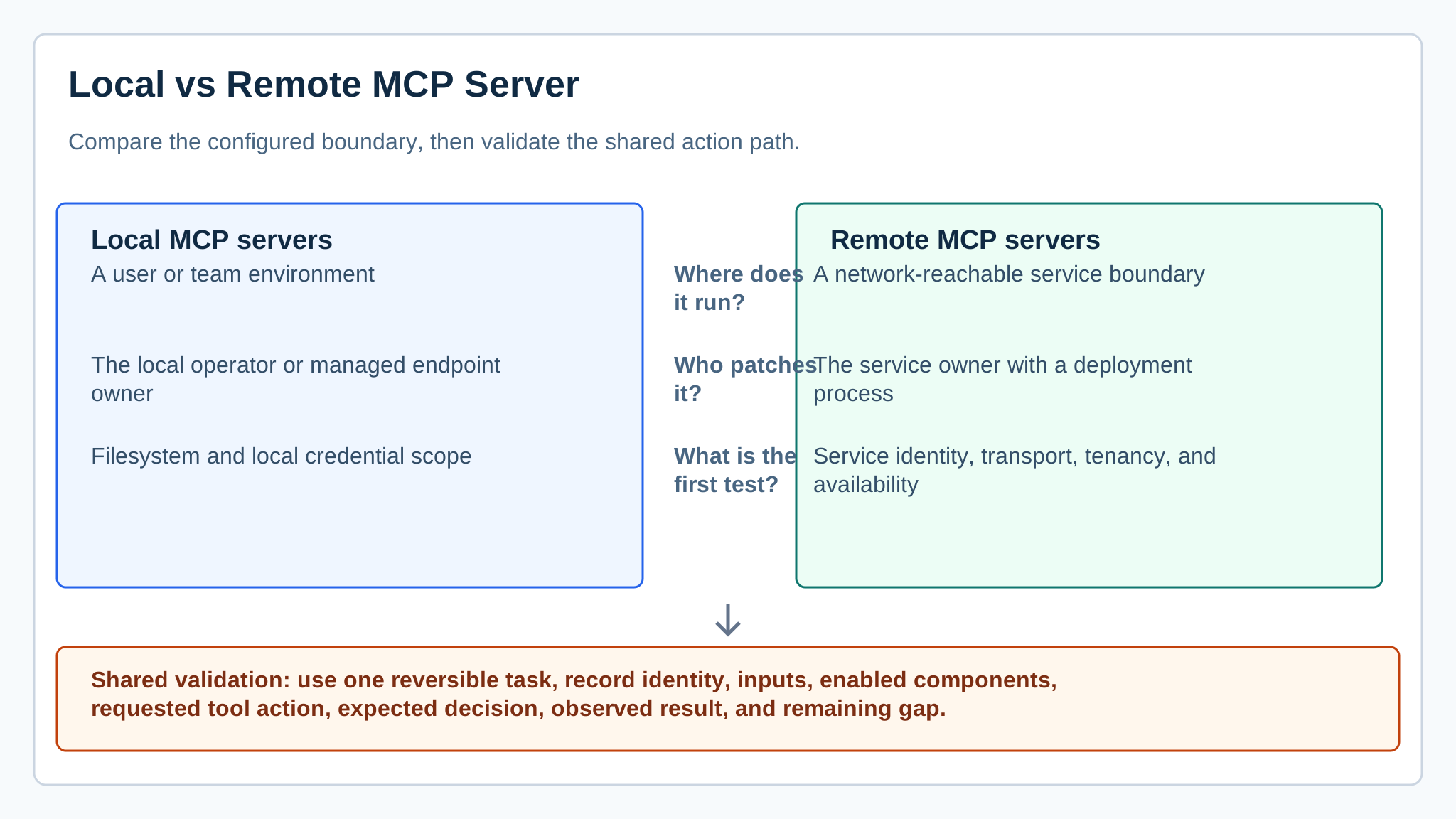
*Deployment map for local and remote MCP service boundaries. It does not rank the two architectures.*
The short answer
Start from the resource and the party that must authorize it. The AI agent security guide provides a concrete checklist for the host, identity, tool, target, and expected side effect.
A local deployment puts server execution beside the endpoint's files, processes, and credentials. A remote deployment creates a transport and service-identity boundary. The protocol itself does not decide who owns either boundary.
Use the MCP specification and the security references to define connection and authorization expectations. Then test the deployment's actual service identity, endpoint access, and recovery behavior. The cited references are Model Context Protocol specification and MCP authorization specification.
Assign endpoint ownership locally and service ownership remotely before a client is permitted to use the server.
What changes at the boundary
| Question | Local MCP servers | Remote MCP servers |
|---|---|---|
| Where does it run? | A user or team environment | A network-reachable service boundary |
| Who patches it? | The local operator or managed endpoint owner | The service owner with a deployment process |
| What is the first test? | Filesystem and local credential scope | Service identity, transport, tenancy, and availability |
When a local MCP server is the better fit
Choose local when the task genuinely needs a local resource and the operator can minimize filesystem, process, and secret access. The proof is a denied attempt outside that narrow scope, not simply a successful local connection.
The local advantage disappears if the server inherits a broad user profile or reads the workstation credential store. Endpoint policy, process isolation, and a minimal working directory are part of the local design, not optional hardening.
When a remote MCP server is the better fit
Choose remote when multiple clients need a shared capability with a service boundary. Test authenticated access, tenant separation, request logging, outage behavior, and the permissions granted to the remote service. The MCP security tools list can guide the separate question of server intake.
A remote service can centralize operations but may widen the blast radius if many clients share one identity or tenant. Require the vendor or service owner to show revocation, per-client authorization, and what happens when the service is unavailable.
AgentGuard adds value when the deployment contains skills, plugins, MCP servers, or supported local tool actions that need an explicit component or pre-action check. Its published material does not establish every remote runtime integration, so validate the host and hook that you use.
A hybrid design is possible, but it should be documented as two distinct trust boundaries. Do not use a local client connection to bypass the service identity and authorization rules that the remote architecture was intended to enforce.
A test that makes the decision clearer
Build one harmless tool that reads a synthetic file. Run it locally with an out-of-scope path, then through the remote design with an unauthorized identity. Record the deny, the trace, and the operator responsible for a configuration change. A changed server package is a potential agent dependency pollution event.
If the local design uses a supported AgentGuard path, test the supported local boundary without treating the result as remote-service coverage.
Decision guide
Prefer the deployment with fewer unowned permissions for the resource in question, and record local and remote responsibilities separately in a hybrid design.
Frequently Asked Questions
Is a remote MCP server safer than a local server?
Not by default. Remote deployment adds service identity, transport, tenancy, and outage controls; local deployment adds endpoint, process, filesystem, and credential controls.
When is a local MCP server the better choice?
Choose local when the task requires a narrowly scoped workstation resource and the operator can prove that out-of-scope files, processes, and secrets are denied.
What should a remote MCP proof test include?
Use an unauthorized client identity, verify tenant separation and revocation, inspect request logs, and record what happens when the service is unavailable.
Compare local and remote MCP boundaries with one reversible task and two denied cases.
Compare boundaries